
Frogs here, frogs there, frogs just jumping everywhere!
Plus: a listen back on our last season, and a very Jewish film recommendation.
Welcome back to Chutzstack, the Substack for Chutzpod listeners – or our Chutzsquad!
This Substack gives you a weekly dose of Chutzpod to keep you learning and pondering life’s questions, both big and small, and a community space to connect with each other.
You can support Chutzpod by subscribing to the podcast and donating today.
January 16, 2026 // 27 Tevet, 5785
This week, Rabbi Shira writes about what the Ten Plagues can teach us about our modern world:
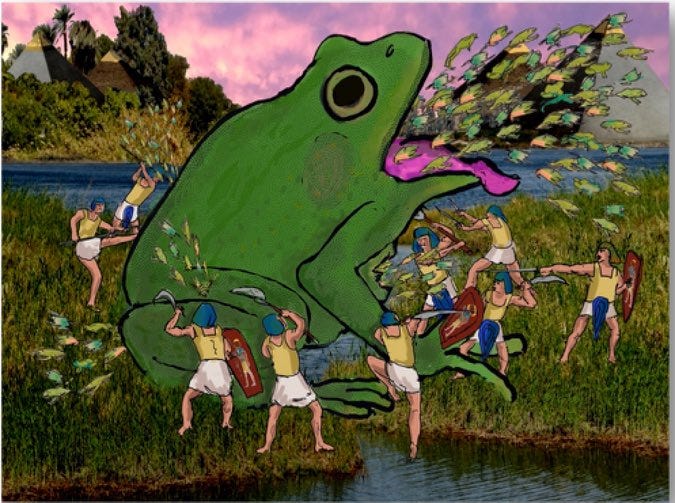
One morning when Pharaoh awoke in his bed, There were frogs in his bed
And frogs on his head. Frogs on his nose and frogs on his toes
Frogs here, frogs there, Frogs just jumping everywhere.
So many of us first nowadays think of the Ten Plagues as something… almost adorable. They show up in children’s songs and in Seder bags filled with plague puppets. And honestly: I get it. We’re trying to get kids through a long seder night.
But Va’era won’t let us stay in the cute version. Because these plagues are not cute. They are terrifying.
Imagine not being able to find drinkable water. Imagine your skin crawling with lice. Imagine a sky that rains down hail with fire inside it. These are torments. And Torah makes us look directly at what happens when a society builds itself on cruelty: the world itself begins to feel unlivable.
And then the question—because we are Jews and we cannot leave a story alone—is: why these plagues? Why blood? Why frogs? Why boils? Why darkness you can feel?
One classic rabbinic answer is middah k’neged middah—measure for measure. The plagues, the rabbis say, are not random. They are calibrated. A kind of moral physics: the harm you put into the world comes back to you in a form that mirrors what you did.
But there’s another way to hear middah k’neged middah. A modern scholar, Rabbi Tali Adler, points out that some of the plagues don’t just punish. They reveal. They force the Egyptians to see what they have learned not to notice.
Take the Nile: For the Egyptians, the Nile is life. It’s sustenance. It’s the source. But for the Israelites, the Nile has also been a site of horror: a place where babies were thrown. In that sense, the Nile has always been full of blood. So the plague of blood doesn’t create the cruelty; it makes it visible.
In that reading, the plagues are not only a Divine decision. They are also an exposure of reality. And suddenly, middah k’neged middah starts to sound less like “God is punishing you,” and more like: you will live in the world you make.
It was true then, and it’s true now. Because one of the strangest things about modern life is how easy it is to avoid the consequences of our choices. We can buy clothes without seeing the factory. We can have a package appear on our doorstep as if it came from the sky. We can live inside systems that do real harm and still move through our days feeling basically… normal. Not because we’re monsters, but because distance is a powerful anesthetic.
If it’s true that we have to live in the world we build, then middah k’neged middah is not only a warning. It’s also an invitation.
It means our small choices matter. Our daily behaviors matter. Our attention matters. The words we use matter. The way we treat people who are easy to overlook matters.
Maybe the first step is simply this: make one hidden thing less hidden. Learn one story you’ve been spared from knowing. Ask one more question about where something comes from. Notice one person you’ve been trained to treat as part of the scenery. Choose one way—just one—of aligning your life with dignity.
Let’s tell the truth about the world as it is, and be part of building a world in which life-giving rivers are actually life-giving for not only for us, but for all who dwell on earth.
Listen
We’re off for a short break, but catch up on all episodes from our latest season now!
Support!
If Chutzpod has kept you company on a walk, on a drive, maybe improved your mood at some point, or made you feel a little bit more steady in a wobbly world, please consider making a donation to our show. Even $5/month helps us keep Chutzpod running, and builds our community into the warm, inviting, funny space that you know and love.
Connect
Make sure you’re following Chutzpod, Shira and Hanna on social media.
Follow Hanna on Instagram
Follow Shira on Instagram
Follow Shira on Facebook
Follow Chutzpod on Facebook
Follow Chutzpod on Instagram
Before we go
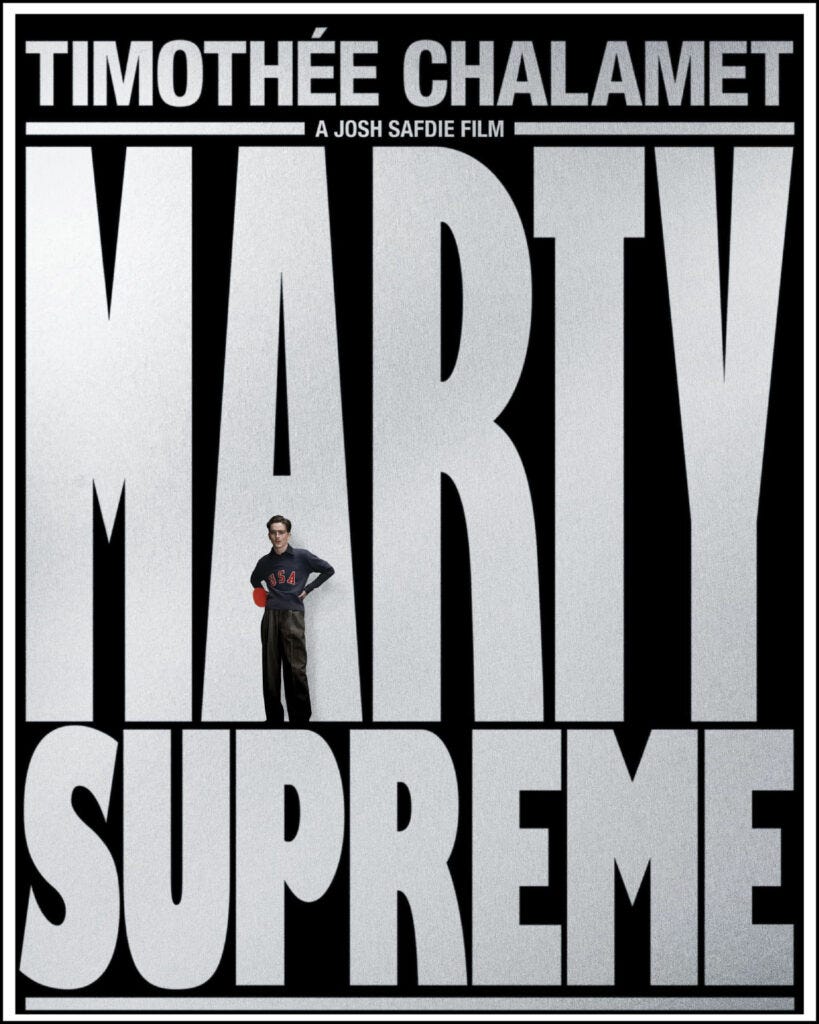
Hanna saw Marty Supreme and feels it’s a very Jewish movie, despite not having a huge focus on Marty’s Judaism. If you saw the movie, what did you think?
Don’t forget to share your thoughts in the comments, listen, send us your questions, and donate.
Shabbat Shalom Chutzsquad!