
Sowing Community
Plus: gearing up for our next season, and Jewish American Heritage Month.
Welcome back to Chutzstack, the Substack for Chutzpod listeners – or our Chutzsquad!
This Substack gives you a weekly dose of Chutzpod to keep you learning and pondering life’s questions, both big and small, and a community space to connect with each other.
You can support Chutzpod by subscribing to the podcast and donating today.
May 8, 2026 // 21 Iyar, 5786
“Six years you shall sow your field, and six years you shall prune your vineyard, and gather in its produce.”
Thus begins this week’s Torah portion, Behar-Bechukotai. Usually when we talk about this parashah, we don’t focus on these six years. We focus on the seventh: the sabbatical year, shemitah — the seventh year, in which we allow the land to rest. But it is worth noticing that before the Torah gets to the seventh year, it lingers over the first six:
Sow your field. Prune your vineyard. Gather in the produce.
The sabbatical year does not stand alone. Its extraordinariness is inseparable from the six years that made it possible. Growth does not happen all at once. It happens through years of care, over expanses of time.
This is true not only of fields and vineyards. It is true of communities, too.
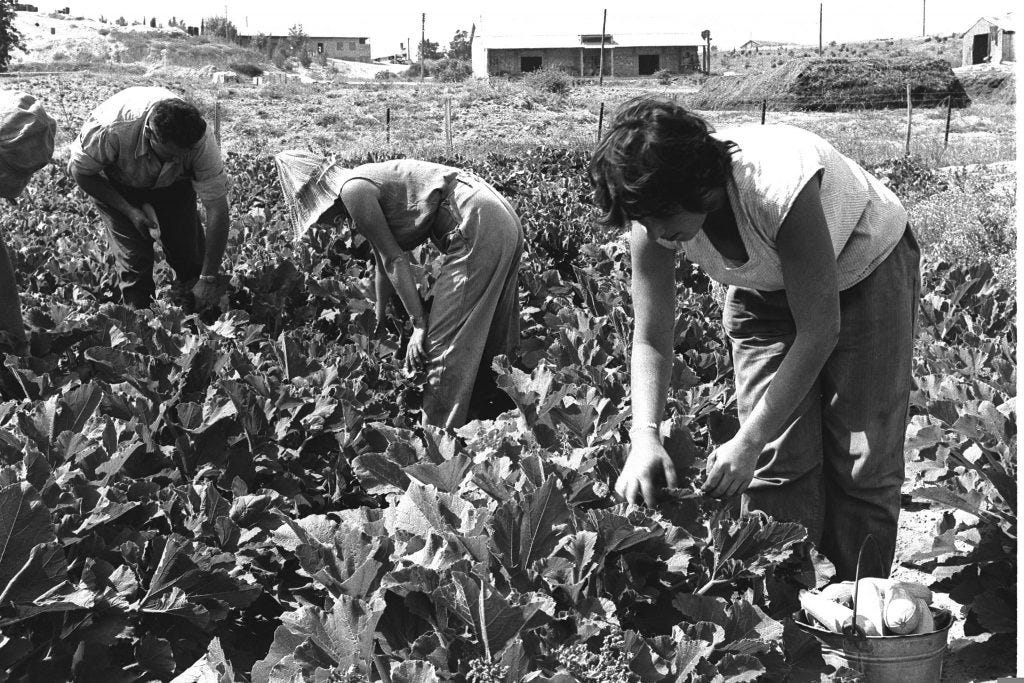
Anyone who has actually tried to build a community knows that the harvest only happens because of the planning, planting and the watering. Someone needs to show up and do the work of fixing, carrying, preparing, trying again, saying yes, saying no, and then getting up and doing it again the next day.
The work described in this portion is the work of melacha: real, constructive labor. Sowing, pruning, gathering, building a field that can bear fruit. Our tradition does not romanticize that labor; it takes it seriously. Life depends on it. But in the Torah, there is another kind of work, too.
In the description of the building of the Mishkan, the portable sanctuary in the wilderness, the Torah uses two different words to describe what the Israelites have done. There is melacha, the tasks, the physical labor of building, much like the physical labor of working the land. But there is also the avodah, the act of service, which the Chatam Sofer teaches is actually the work of the heart: the generosity, devotion, intention, and spirit that animate the labor. The Mishkan was holy not only because the Israelites built it well, but because the work of their hands — their melacha — was infused with the service of their hearts.
The same is true of community.
The best communities are not built by melacha alone. They are not built only by competence, logistics, calendars, budgets, details, or chairs in the right place at the right time. And they are not built by avodah alone either — by good feeling, good intention, warmth, vision, love. The best communities are built by people who know how to bring both kinds of work together: the hands know what to do, and the heart knows why it matters.
As we read about six years of sowing and pruning before the seventh year of rest, the Torah is inviting us to honor not only the holiness of rest, but also the holiness of sustained labor: effort that is really love-in-action, years given to something beyond ourselves, commitment over time as a blessing for the people around us.
Only then, after all of that, does the Torah bring us to the seventh year. After the sowing, after the pruning, after the gathering, after years of care, comes shemitah.
This parshah reminds us that even with all of our melacha, and our avodah, not only the produce, but even the field itself, is ultimately not ours. The land belongs to God, and we are its temporary caretakers. That means our work is not ultimately about possession; it is about stewardship. We care for what has been entrusted to us. We tend what we have inherited. We make it stronger, healthier, more able to sustain life. And then we release it, thinking perhaps that this is what the Torah has been trying to teach us all along: that holiness is everywhere, in all the parts.
And, then when the seventh year comes, in the tender, holy, and brave work of letting it go.
Support!
If Chutzpod has kept you company on a walk, on a drive, maybe improved your mood at some point, or made you feel a little bit more steady in a wobbly world, please consider making a donation to our show. Even $5/month helps us keep Chutzpod running, and builds our community into the warm, inviting, funny space that you know and love.

Listen
Our season is finished, but we’re already revving up for our next. Got a question for us? Need some life advice? Want to complain about your mom? Email us at chutzpod@gmail.com and let Hanna and Shira talk you through it all.
Connect
Make sure you’re following Chutzpod, Shira and Hanna on social media.
Follow Hanna on Instagram
Follow Shira on Instagram
Follow Shira on Facebook
Follow Chutzpod on Facebook
Follow Chutzpod on Instagram
Before we go
May is Jewish American Heritage Month! This month, try a book that speaks to the Jewish American experience. Got a recommendation for us? Leave it in the comments below!

Don’t forget to share your thoughts in the comments, listen, send us your questions, and donate.
Shabbat Shalom Chutzsquad!